Saint Luke’s Has Cullen Resign and Gives Him a Neutral Reference
The Good Nurse: A True Story of Medicine, Madness, and MurderSaint Luke's Medical Center's decision to have Charles Cullen resign and provide him with a neutral reference ended the hospital's immediate employment relationship with him but did not bring its concerns into public view. Faced with drug caches, a lawyer's interview, and a nurse due back on shift within hours, administrators chose a course they regarded as best for the hospital. The consequences extended beyond the parking garage: Cullen could present his Saint Luke's employment as continuing, and the warnings circulated among some hospital colleagues did not reach Somerset Medical Center, the police, or the state nursing board.
The evidence behind the confrontation
The decision followed the discovery of repeated caches of dangerous drugs in a sharps box on the CCU. On the morning of June 3, day nurse Gerry Kimble and manager-supervisor Terry Koehler, wearing sterile gloves and watched by a hospital security officer, emptied the container onto a counter. They found several dozen bottles, including ten spent vials of vecuronium bromide. The drugs had already been used on Edward O'Toole seven hours earlier, although those examining the cache did not yet know that.
The investigation had unfolded against a pattern of suspicious activity, not a single misplaced vial. Risk manager Janice Rader directed the charge nurse to check the sharps box regularly; while Cullen was away, it remained empty. When he was scheduled to return in less than eight hours, Rader and risk management director Ken Vail considered what would be best for the hospital and consulted in-house counsel Sy Traub. Traub brought in the law firm Stevens and Johnson, including Paul Laughlin, a former assistant district attorney. By the time another cache was discovered after midnight, Laughlin had returned to the hospital and was waiting in an empty room near the CCU.
The drug caches mattered because Cullen's work gave him ordinary-looking access to medicines and patient lines. At Saint Luke's, he had injected digoxin into an elderly patient's IV through its piggyback port, a route nurses routinely used to flush lines. On a later shift, he entered the medication-supply room while stocking drugs and tampered with IV preparations. These actions were concealed within legitimate nursing routines: the same nurse could appear helpful while preparing medications, assisting colleagues, and responding to a code. The administrative confrontation therefore concerned not only missing drugs but how easily suspicious conduct could be interwoven with routine care.
The interview and resignation
Laughlin questioned Cullen about his background and work habits, including his practice of arriving early to stock drug totes. Cullen said he had done so that day and that it took about ten minutes. As the questioning turned to who could have placed the drugs in the sharps box, Laughlin described the shifts on which medicines had been found and explained the handling required for vecuronium bromide. Cullen understood that the shifts pointed toward him. He could see that the hospital had patient records, blood work, laboratory reports concerning the drug overdoses, and the vials themselves. He regarded the questioning as bullying and told Laughlin, “You’ve already made up your mind about it,”
The choice offered to Cullen was formally a resignation, but the narrative presents it as a narrow alternative rather than a meaningful chance to remain. If he resigned, Saint Luke's would provide neutral references, and the incident would not appear on his employment record. Cullen accepted. In his interpretation, he was the righteous party being forced out and the hospital was protecting its standing; he thought of the institution's interest in remaining on lists of America's best hospitals. The account distinguishes that perception from the hospital's religious identity: although Cullen imagined he was being expelled by a Catholic hospital, Saint Luke's was not Catholic.
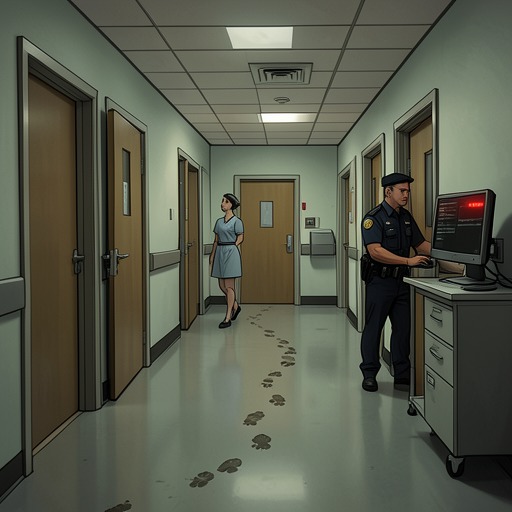
Security escorted Cullen through the unit and left him in the cool of the parking garage. The institutional response had moved from searching the sharps box to a private interview and a negotiated departure. The hospital ended his shifts, but the neutral reference preserved a usable account of his employment rather than exposing the allegations that had prompted his exit.
A reference that enabled another job
Three days after the escort, on June 8, Cullen arrived early for a night shift at Sacred Heart Hospital in Allentown. He could truthfully list his Saint Luke's CCU employment as “June 2000 to present” and rely on the neutral reference. His transition appeared ordinary, and Sacred Heart had not received a call from Saint Luke's. Other administrators had begun contacting colleagues, but their warnings had not reached every prospective employer.
Cullen's time at Sacred Heart was brief. He began dating fellow new hire Cathy Westerfer, and, within two weeks, received a familiar call telling him not to return for shifts. The reason was not a formal disclosure from Saint Luke's: a Sacred Heart nurse who had worked at Easton Hospital had heard stories about the suspicious digoxin death of Ottomar Schramm. She passed those stories to coworkers, who petitioned the administration and threatened to quit en masse unless Cullen was fired. The contrast is consequential: at Sacred Heart, information carried informally by a nurse helped prompt collective pressure, while Saint Luke's official neutral reference withheld the circumstances of his departure.
Saint Luke's later maintained that Laughlin's investigation, chart reviews by Rader and Koehler, and inquiries by general counsel Traub had failed to identify suspicious deaths related to the empty vials or other suspicious actions by Cullen at the hospital. At the same time, administrators did not want him working in their health-care system and apparently believed other hospitals had reason to reject him. In August 2002, senior vice president Charles D. Saunders contacted local Bethlehem-area colleagues, asked whether they had experienced unusual incidents involving Cullen, and said he should not be considered for rehire. Saint Luke's executive vice president Vince Joseph and Laughlin also called colleagues. Those warnings were selective: they were not passed to the public, the police, or the state nursing board, and Somerset Medical Center was not on the call list.
Institutional consequences
The resignation separated Cullen from Saint Luke's without resolving what the evidence meant for patients or for other hospitals. The book places a private employment remedy beside a public-safety problem: the hospital could end his access to its wards, yet a neutral reference and incomplete circulation of warnings left room for him to continue seeking work. Its subsequent calls show that administrators did act to discourage some local employers from rehiring him, but those efforts coexisted with the decision not to notify law enforcement or the nursing board.
That combination gives the departure its larger significance. The hospital's response was neither simple inaction nor a full public disclosure. It involved an internal investigation, legal consultation, removal from the workplace, and warnings passed privately to selected colleagues. The account also preserves the gap between institutional claims and practical effect: Saint Luke's said its reviews had not tied suspicious deaths to Cullen there, while its senior administrators still regarded him as someone other hospitals should not rehire. The neutral reference closed the immediate employment matter on terms that protected the hospital's discretion; it did not ensure that the next institution would know why Cullen had left.